Event Marketing That Actually Fills Seats
Most event organizers post and hope for the best. Discover how Dubai's top event teams build a marketing strategy that moves tickets. Here is how Entryvent supports every step.

You didn’t start organising events to become a marketing agency.
You started to create experiences. But in 2026, getting people through the door means more than sending a calendar invite or posting on Instagram and hoping for the best.
The events that sell out aren’t the loudest ones. They’re the ones telling the right story to the right people, on the right channels, at the right time.
Here’s how to build a marketing plan that actually moves tickets, and why most event organisers are leaving registrations on the table.
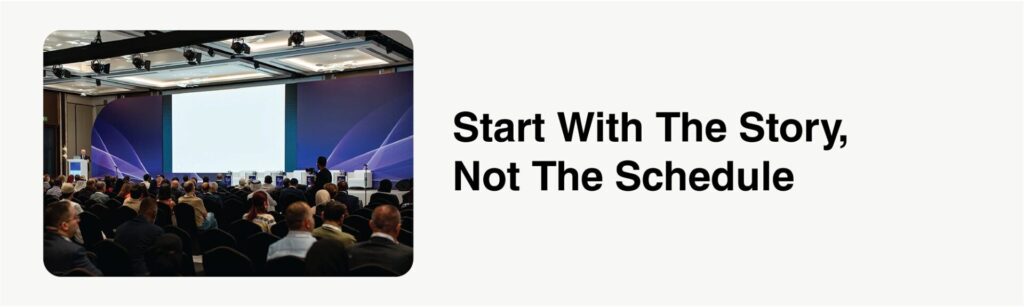
Most event promotions lead with logistics. Dates, venues, speaker lists. That’s useful eventually, but it won’t make anyone stop scrolling.
Before you write a single caption or set up a single ad, answer one question: why does this event matter to the person attending it? Not to you as the organiser. To them.
A networking breakfast for Dubai’s hospitality sector isn’t really about breakfast. It’s about the ops director who needs to justify her budget, build new supplier relationships, and get out of back-to-back internal meetings. Speak to her reality and she’ll register before she finishes reading.
Once you have that story, condense it. You have roughly eight seconds to capture attention. If your event description takes longer than that to land its value, rewrite it.
The quick test: Read your event’s headline aloud. If someone who’s never heard of you understands the benefit in one sentence, you’re there. If they need context first, cut and rewrite.
Understand what your attendee actually wants
Demographics tell you who’s in the room. Motivations tell you why they showed up.
Most people register for events for reasons they won’t say out loud. A conference delegate from a large corporate might tell you they’re attending “to stay up to date with industry trends.” What they often mean: they’re positioning for a promotion, or proving their value to a sceptical manager.
Your marketing should speak to the real motivation, not the stated one.
Map out your ideal attendee. Give them a name, a job, a challenge they’re trying to solve. Then review every piece of your marketing through their eyes. If it doesn’t speak to them specifically, it probably won’t land.
Pick three channels and focus on them
You don’t need to be everywhere. You need to be where your attendees already are, showing up consistently with something worth their attention.
Here’s how to think about channels for events in Dubai and the UAE:
- LinkedIn: Corporate events, conferences, B2B. Decision-makers are here. Lead with outcomes, not agendas.
- Instagram: Consumer events, lifestyle, hospitality. Show the experience, not the itinerary. Reels over statics.
- Email: Your highest-converting channel. No algorithm, no pay-to-play. Direct access to people who already opted in.
- WhatsApp Broadcast: Particularly effective in the UAE. Short, direct messages. Use for announcements and final-push reminders only.
Email deserves special attention. Once someone is on your list, you can reach them at no extra cost for every future event. Build that list actively: through early-access sign-ups, speaker announcements, and post-event follow-ups.
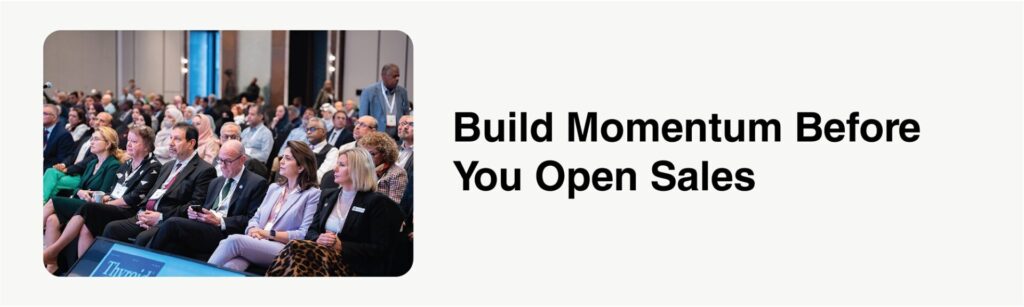
The biggest mistake event organisers make: announcing everything at once. One post. One email. Then silence until the week before.
Build a timeline that drip-feeds information and gives people a reason to keep coming back.
- Week one: Tease before you announce. Drop a single image or countdown. No details yet. Curiosity primes your audience to pay attention when the full announcement lands.
- Week two: Launch with early-bird pricing. Make the discount meaningful. When it closes, let it close. Extending it every time kills credibility.
- Weeks three and four: Release announcements in stages. Speakers, venue reveals, agenda highlights. Each one is a fresh reason to post, email, and re-engage people who showed interest but haven’t registered yet.
- Final 5–7 days: Shift your messaging to deadline and scarcity. Honest scarcity: if tickets are genuinely limited, say so. Don’t manufacture urgency that isn’t there.
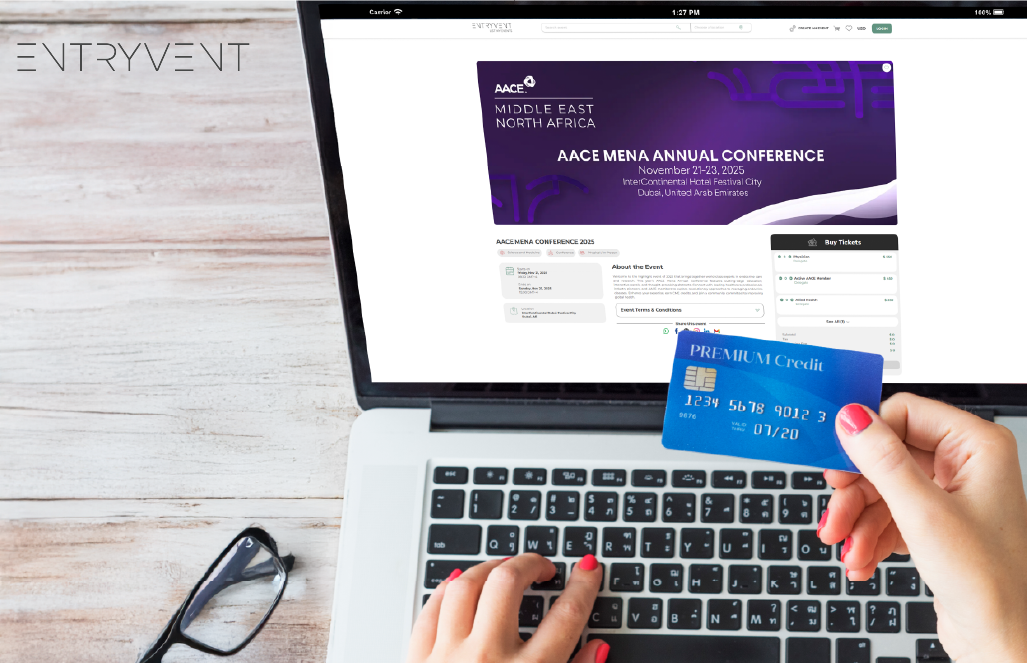
Your marketing has done its job. Someone clicks through to register. This is not the moment to ask fifteen questions or put them through a four-step checkout.
Every extra step is a chance for them to change their mind. Keep your registration form short. Keep your checkout mobile-friendly. Make the confirmation email clear and complete.
- Short form: Name, email, and payment. Ask anything else only if you genuinely need it before the event.
- Mobile-first checkout: Over 70% of ticket purchases in Dubai happen on a phone. If your checkout isn’t smooth on mobile, you’re losing sales.
- Instant confirmation: The email should include the ticket, the date, the venue, and what to bring. No hunting through PDFs.
- Abandoned registration follow-up: One email within 24 hours. Remind them what they’ll miss. That’s it.
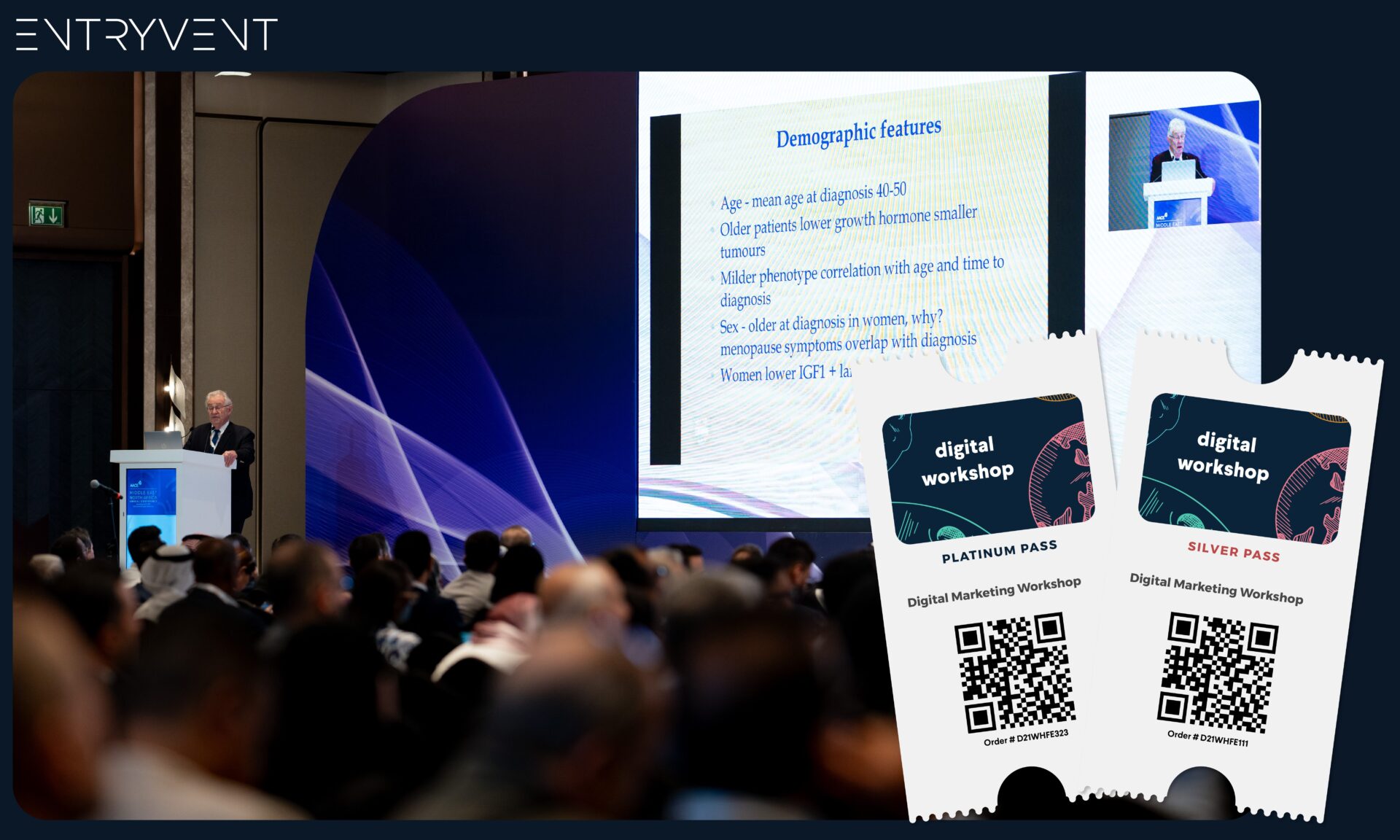
Entryvent handles this automatically. Your registration page is mobile-optimised by default. Attendees receive a DTCM-compliant QR code the moment they book. No extra setup required. You focus on the event. We handle the confirmation.
If your current marketing setup is one post, one email, and a prayer. You’re not running a strategy. You’re leaving registrations to chance.
The events that consistently sell out aren’t necessarily the biggest or the best-funded. They’re the ones that understand their audience, tell a clear story, show up consistently, and make it easy for people to say yes.
That’s not complicated. But it does need to be deliberate.